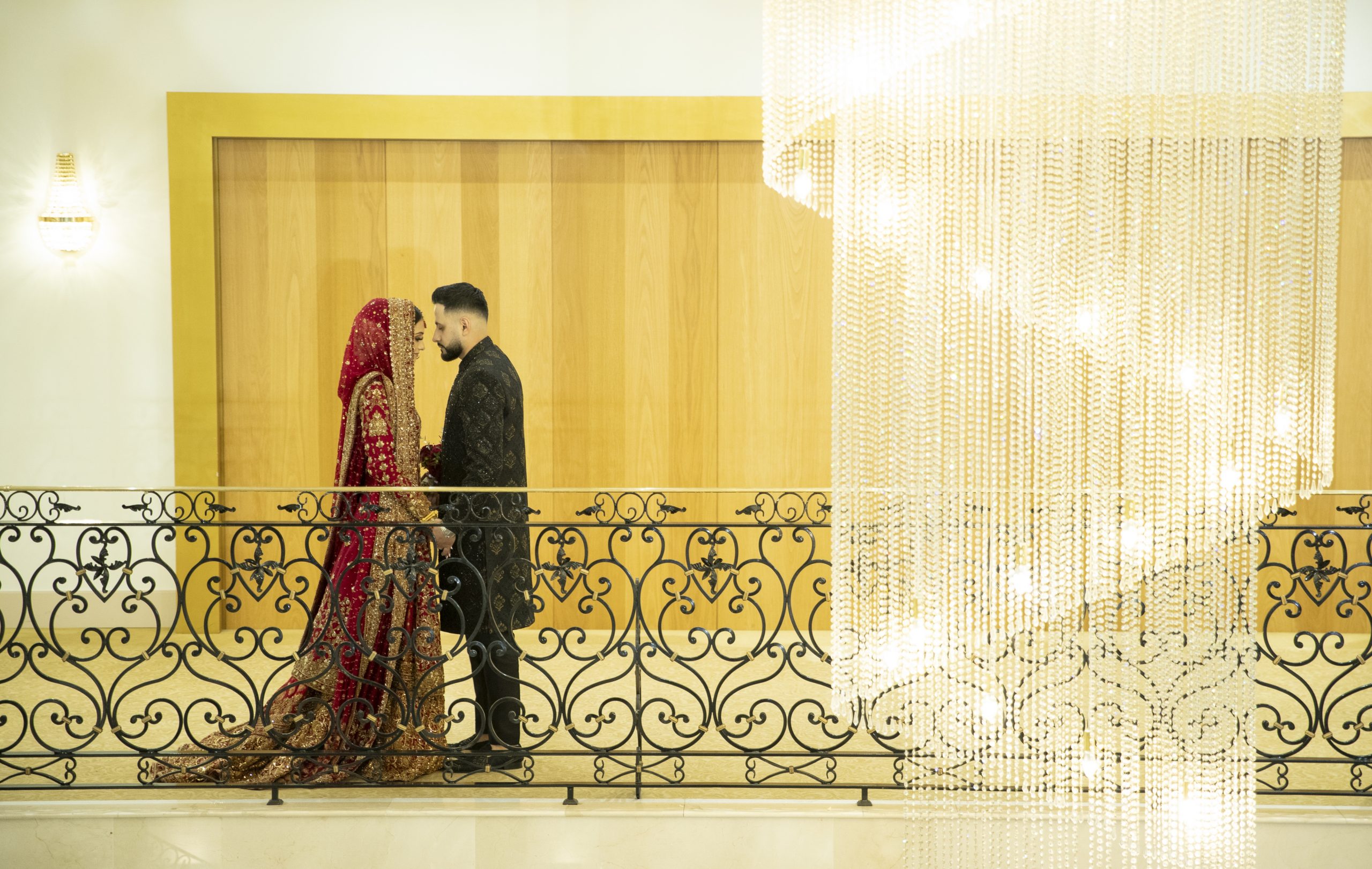
A nikah is the Islamic marriage contract. The nikah ceremony itself usually runs 30 to 45 minutes and requires the consent of both parties, two adult witnesses, an agreed mahr, and someone to conduct it. In England and Wales a nikah is not automatically a legal marriage, although the government is now consulting on changing exactly that.
That consultation makes 2026 an unusual year to plan one. Most guidance online still tells couples a nikah can never be legally binding here, which has held in practice but may not hold much longer. At Meridian Grand we host nikah ceremonies for families across several London communities; below is what happens on the day, how the ceremony differs between them, and what to ask a venue before you commit.
What happens at a nikah ceremony?
A nikah is a contract rather than a service of vows. An imam or qualified officiant delivers a short khutbah, then puts the offer and acceptance to each party in turn. Both answer, commonly with the word qubool. Two witnesses observe, the mahr is stated, duas are read, and the contract is signed.
The order of a nikah ceremony is consistent even when the setting is not:
- Khutbah. A short sermon on marriage and mutual obligation.
- Ijab and qabul. The offer and its acceptance, put separately to each party.
- Mahr. The gift from groom to bride, agreed beforehand and stated aloud.
- Duas. Prayers for the couple.
- Signing. The contract is signed by both parties and two adult witnesses.
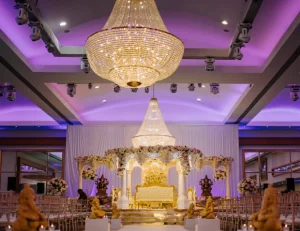
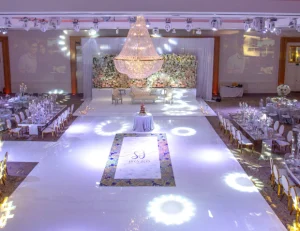
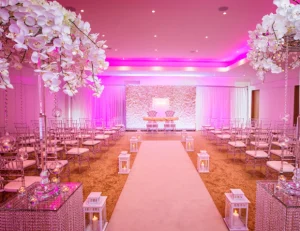
Families vary the framing considerably. Some hold the nikah in a mosque with thirty guests, some in a ballroom with four hundred, and the ceremony is valid either way provided the requirements are met.
How long does a nikah ceremony take?
Allow 30 to 45 minutes for the nikah ceremony itself and around 75 minutes for the whole block. The extra time absorbs late arrivals, the signing, and the congratulations and photographs that follow. Ceremonies that include additional readings or a longer khutbah can run to an hour without anything having gone wrong.
The planning error we see most often is treating the ceremony length as the room booking. A nikah that starts twenty minutes late because guests are still arriving is normal; a nikah booked into a room that must be cleared for dining forty minutes later is a problem. Build the buffer in at the start.
Is a nikah legally recognised in the UK?
Not on its own, as the law stands in August 2026. A nikah ceremony conducted in England and Wales is a religious marriage. To be legally married you also need a civil ceremony, either at a register office or at a venue licensed to hold one. Without it you have no legal standing as spouses.
This catches a lot of couples out. A Channel 4 survey of 1,000 British Muslim women found 61% had a nikah only, with no civil ceremony, while 78% wanted their marriage to be legally valid. The gap between what people intend and what they have is the whole problem.
What the government is consulting on
In July 2026 the Ministry of Justice opened a consultation, Tying the Knot: Reforming Weddings Law in England and Wales, following the Law Commission’s 2022 report. It proposes moving from a system based on registered buildings to one based on authorised officiants. If it becomes law, an authorised Islamic officiant could conduct a nikah that is legally recognised in itself, with no separate civil ceremony needed.
It is a consultation, not a change. It closes on 24 September 2026 and nothing is in force. Plan around the law as it stands today and treat any change as a bonus.
Doing both on the same day
Our venue is licensed for civil marriage ceremonies, so the legal ceremony and the nikah can take place here on the same day rather than in two locations on two dates. You book the registrar directly through the local register office; the venue holds the licence that allows the ceremony to happen on site. Confirm dates with the register office early, as registrar availability books further ahead than most couples expect.
How the nikah differs across communities
The nikah ceremony itself is common to all Muslim marriages. Almost everything around it is not. What precedes the nikah, who hosts what, and how the day is named vary by community, and getting the vocabulary right matters when you are briefing a venue or an officiant.
- Pakistani
- Mehndi beforehand, the baraat as the groom’s party arrives, and the rukhsati as the bride departs after the nikah. The walima follows, hosted by the groom’s family. See Pakistani wedding traditions.
- Bengali
- Gaye holud, the turmeric ceremony, comes first and is its own event with its own guest list. The biye carries the nikah, and the bou bhat follows as the groom’s family’s reception. See Bengali wedding celebrations.
- Somali
- The aroos is the wedding celebration proper, with buraanbur poetry and drumming often central to the evening. The meher is agreed and announced within the nikah.
- Turkish
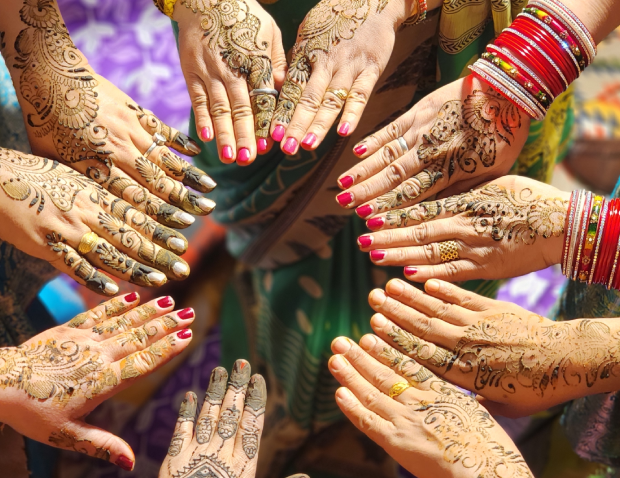
- Kina gecesi, the henna night, precedes the wedding and is traditionally hosted for the bride. Many Turkish families place strong emphasis on the civil ceremony alongside the religious one.
- Afghan
- Shirini khori marks the engagement and is a substantial event in its own right. The nikah and the reception frequently sit on the same day, which makes the running order tighter than most.
Collapsing these into one description is how briefings go wrong. A gaye holud is not a mehndi, and a family will notice immediately if you treat them as interchangeable.
Holding the nikah and walima at one venue
Running both at one venue removes the transfer between locations, which is where guest numbers usually drop. The practical requirement is a room that can be reset, or a second space, plus a running order agreed in advance. Segregated seating, if you want it, has to be designed into the floorplan rather than improvised on the day.
The questions worth settling early are unglamorous and they decide how the day feels:
- Does the nikah happen in the same room as the meal, and if so, how long is the turnaround?
- Where does the imam need to stand, and is there a microphone in that position?
- If seating is segregated, does that apply to the ceremony, the meal, or both?
- When does catering need the room, and does that clash with photographs?
- Who greets the officiant on arrival and briefs them on timings?
Our coordinators work these through as a running order before the week of the wedding, because a nikah that overruns has to come out of something, and it is better to decide in advance what that is. Related events such as mehndi and henna nights are usually scheduled on separate dates.
What to ask a venue before you book
Ask whether the venue is licensed for civil ceremonies, how long you have the room for the nikah ceremony, whether it can be reset for dining, and how segregated seating is handled. Ask who your point of contact is on the day. The answers separate venues that host Muslim weddings regularly from those that accommodate them occasionally.
Two further questions people forget. First, whether the catering is in-house, since an external caterer adds a supplier relationship you will have to manage. Second, whether the venue has worked with your community’s ceremonies specifically, not Muslim weddings in general. Muslim weddings at Meridian Grand covers how we handle both.
Frequently asked questions
Can you have a nikah anywhere, or does it have to be in a mosque?
A nikah ceremony can take place anywhere, including a home, hotel or wedding venue. The requirements are consent from both parties, two adult witnesses, an agreed mahr, and a qualified person to conduct it. A mosque is traditional, not mandatory. Many families choose a venue so the nikah and reception can happen in one place.
What is the difference between a nikah and a walima?
The nikah is the marriage contract and the point at which the couple are married in Islamic law. The walima is the celebration that follows, traditionally hosted by the groom’s family, often the next day. The nikah is the legal and religious act; the walima is the feast that publicises it.
Do we need a register office wedding as well as a nikah?
Under current law in England and Wales, yes, if you want your marriage legally recognised. You can hold the civil ceremony at a register office or at a licensed venue. The government is consulting on reforms that could remove this step for nikah ceremonies, but nothing has changed yet.
How much notice do we need to give for a civil ceremony?
You give notice at your local register office, and there is a statutory waiting period before the ceremony can take place. Registrar availability at licensed venues is often the tighter constraint, particularly on weekends. Check both with your register office as soon as you have a date in mind.
Can men and women be seated separately?
Yes, and it is a common request. It works best when designed into the floorplan from the start, covering whether separation applies to the ceremony, the meal or both, and how the room is entered. Raise it at the viewing rather than during final details.
If you are planning a nikah ceremony in London and want the ceremony, the legal registration and the celebration in one place, arrange a viewing and we will walk you through the running order for your date.