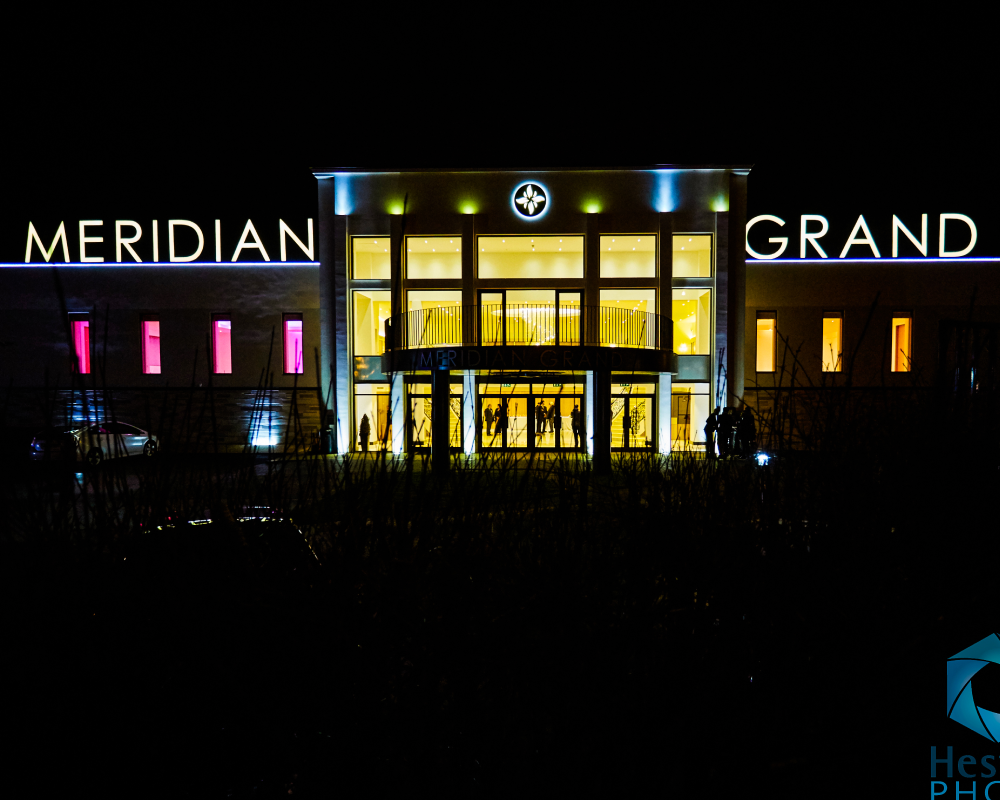
Meridian Grand hosts hundreds of weddings and events a year, and every couple who arrives expects a venue that looks brand-new. Maintaining a busy wedding venue to that standard takes more than a cleaning rota. It takes a system. We run ours on Fixray, which logs every scuff, snag and repair, hands it to a named person, and closes it before the next celebration begins.
What does “brand-new” mean at a venue running events most weekends?
Brand-new means the venue a couple sees on their wedding day carries no trace of the event before it. No chipped skirting, no marked wall, no tired chair. This is the baseline, not a bonus. A venue in North London running events most weekends has to reset to that standard again and again, on a tight turnaround, without fail. The point is invisibility. Couples should never see the joins between one celebration and the next. Between a Saturday Nikah and a Sunday reception there may be only hours, and in that window the suite has to return to zero. Guests notice a venue that looks cared for long before they could tell you why.
Why high-traffic venues wear faster than most operators admit
High-traffic venues wear faster because volume is relentless and damage is cumulative. Hundreds of guests, heavy furniture moved daily, back-to-back turnarounds; each event leaves small marks. On their own they are trivial. Left unlogged across a busy season, they add up to a venue that quietly slips from brand-new to merely fine. The real failure point is rarely the damage. It is the tracking. Traditionally, upkeep lives in a WhatsApp thread, a maintenance person’s memory, or a note that never becomes a job. The scuff someone spotted on Friday is forgotten by Monday. Multiply that across a year and standards drift by degrees no single person ever decided to accept. Nobody chose the decline; it just accumulated in the gaps.
How we catch and fix every issue before the next event
We run venue maintenance on Fixray, a maintenance tracking platform built for hospitality teams. Anyone on the team who spots an issue photographs it and logs it in seconds, and it lands in one shared list. Each job carries a priority and an owner. Overdue work rises to the top on its own. Nothing depends on someone remembering to mention it in passing. It works as a simple loop: report, triage, fix. A housekeeper who finds a marked wall after a Saturday event does not need to track down the right manager; they log it, and it stays visible until it is closed. Managers see everything open across the whole venue in a single view, sorted by what matters most. Priority becomes a property of the job, not a question of who spoke up loudest. Small problems get fixed while they are still small, which is the only reliable way to stop them becoming visible ones.
What changes when maintenance stops living in people’s heads
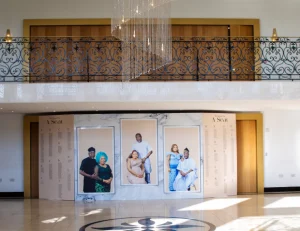
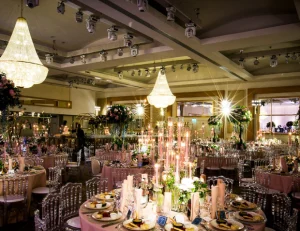
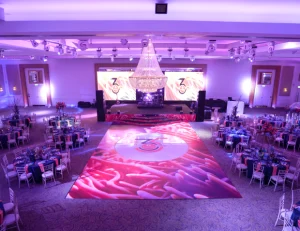
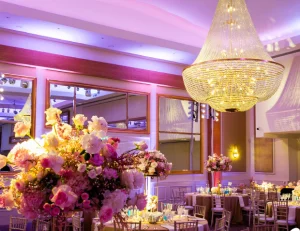
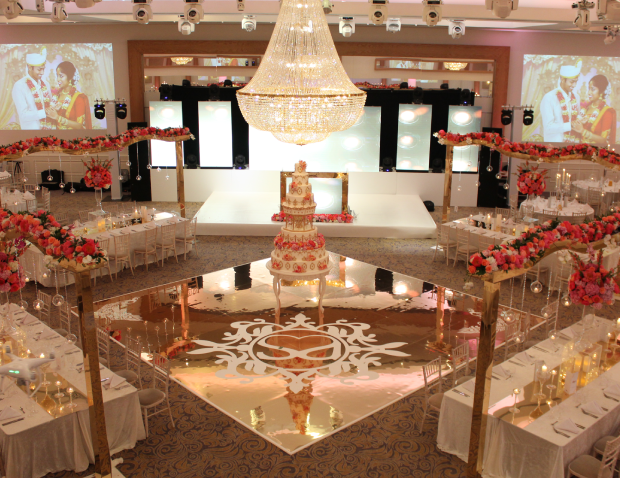
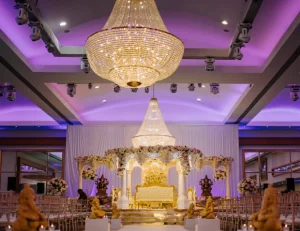
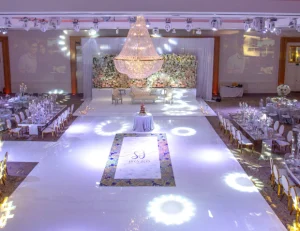
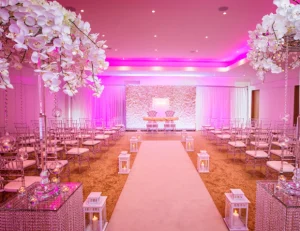
When maintenance leaves people’s heads and enters a shared system, nothing falls through. Issues close in days rather than whenever they happen to resurface. The team stops leaning on memory and goodwill, and the venue stops drifting. Every couple, whether their event falls in January or August, walks into the same condition. Consistency is the real prize. The fortieth wedding of the year should look identical to the first. The venue is the canvas every couple starts with, and it should be clean for all of them, whether the celebration is Nigerian, Somali or Pakistani. Every family gets the same starting point. That is the quiet promise behind weddings at Meridian Grand, and you can see the result across our gallery.
How any venue operator can hold a higher maintenance standard
Any venue can raise its maintenance standard by making three things true: every team member can report an issue in seconds, every issue has an owner and a deadline, and overdue work is visible to managers without anyone chasing it. Most venues have the will. What they lack is the system that removes memory and goodwill as points of failure. In practice, four habits carry most of the weight:
- Capture at the point of noticing. If reporting takes more than a few seconds on a phone, it will not happen mid-shift.
- Triage by guest impact. A mark a guest will see outranks one they never will.
- Keep one source of truth. Scattered threads and verbal handovers are where jobs go to be forgotten.
- Review overdue work weekly. Anything ageing is a standard about to slip.
None of this is glamorous, and that is the point. It is what moves a venue from good-with-effort to consistent-by-default, across our pillar-free suites and every event that passes through them.
Frequently asked questions
How does a busy wedding venue stay in good condition?
A busy wedding venue stays in good condition by treating maintenance as a tracked process, not a reaction. Every mark, snag or repair is logged the moment it is spotted, given a priority and an owner, and closed before the next event. The discipline is in the tracking, which stops small issues accumulating into visible wear.
What is the best way to track maintenance across an event venue?
The best way is a single shared system that anyone on the team can log an issue into in seconds, ideally with a photo. Each job then needs a clear owner, a priority and a deadline, with overdue work surfaced automatically. This removes reliance on memory or informal messages, which are where venue maintenance most often breaks down.
How often should a high-traffic venue check for wear and damage?
A high-traffic venue should check after every event, during the turnaround, when marks are fresh and the space is empty. Continuous reporting by the whole team beats occasional formal inspections, because the people resetting a room see far more than a monthly walk-through ever will. Weekly review of open and overdue jobs keeps the standard steady.
What does Meridian Grand use to manage venue maintenance?
Meridian Grand manages venue maintenance on Fixray, a reporting and issue-tracking system built for this kind of work. The team logs issues with a photo, jobs are triaged and assigned, and overdue work is visible to managers in one place. It is how the venue resets to brand-new condition for every couple, whatever the volume. The standard is easier to see than to describe. Every suite is set, checked and reset for each event, so the venue you tour is the venue you get on the day. Book a viewing and judge the condition for yourself.